
In the early 1980s, music videos were still considered promotional tools rather than major cinematic productions. Most record labels and television networks were willing to fund only modest budgets, assuming that a few minutes of simple performance footage was enough to promote a song. But when Michael Jackson envisioned a short horror film to accompany his hit song "Thriller," he imagined something far more ambitious than the industry had ever attempted before.
Jackson wanted a full narrative production—complete with costumes, makeup, choreography, and cinematic storytelling. To bring that vision to life, he turned to film director John Landis, who had recently achieved success directing the cult horror-comedy An American Werewolf in London. Jackson admired the film's groundbreaking makeup effects and believed Landis could help create something equally thrilling for his music video.
However, the proposal immediately faced resistance. At the time, even the most popular artists rarely received large budgets for music videos. Networks like MTV and broadcasters such as CBS saw little financial logic in spending hundreds of thousands of dollars on a single promotional clip. When Jackson and Landis requested a budget of roughly $500,000—an enormous sum for a music video in 1983—many executives dismissed the idea as excessive and unnecessary.
Faced with this obstacle, Jackson and Landis needed a creative solution. Rather than abandoning the project, they devised a clever strategy that would allow them to secure funding without relying solely on traditional music video financing. Their idea was to film not only the music video itself but also a behind-the-scenes documentary showing how the elaborate production was created.
This companion documentary, eventually titled Making Michael Jackson's Thriller, became the key to financing the entire project. By selling the broadcast rights to the documentary to television outlets such as MTV and Showtime, the production could recover much of the filming cost. Essentially, the behind-the-scenes special became the financial engine that made the ambitious video possible.
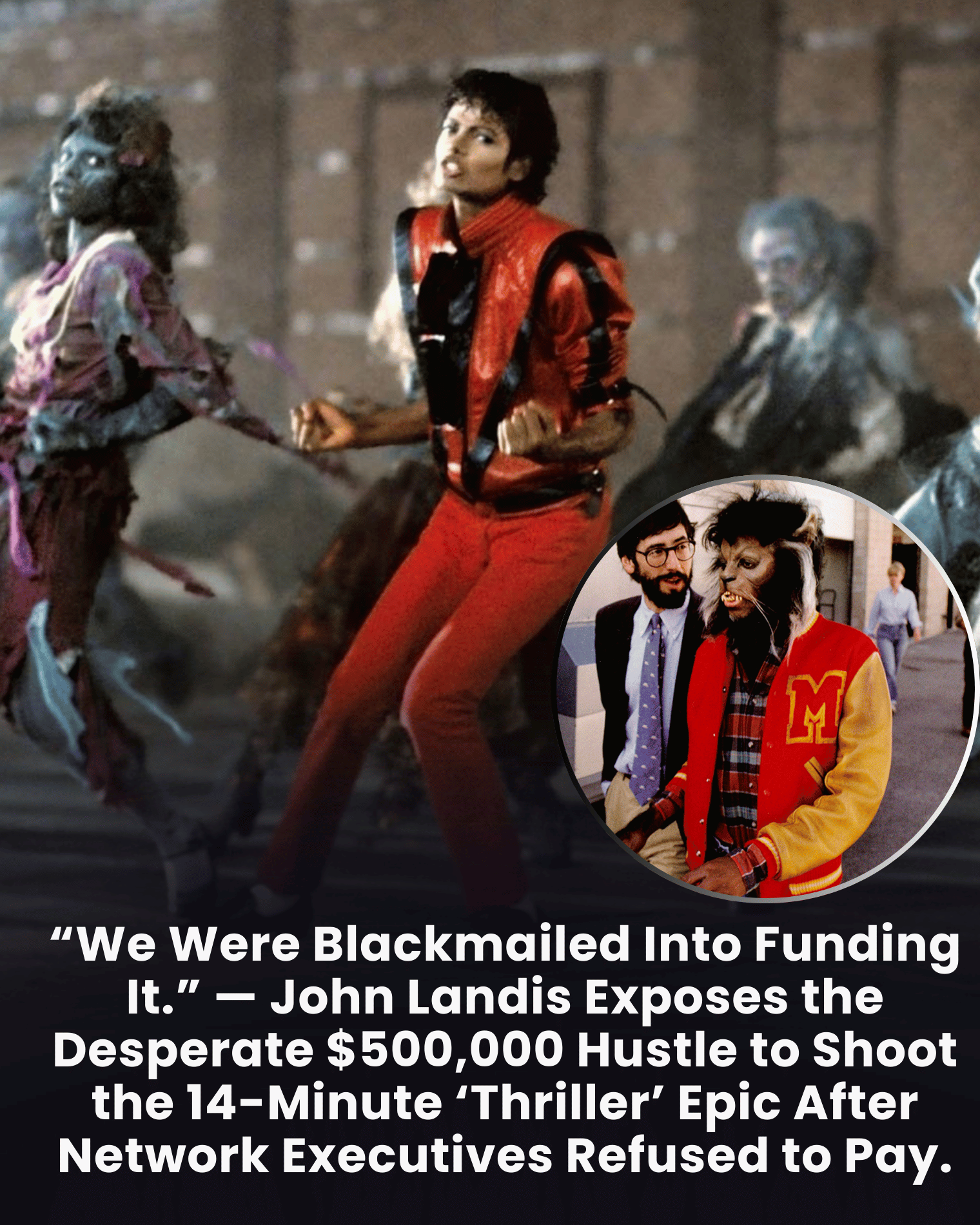
With funding finally secured, the team pushed forward with a level of creativity rarely seen in music videos at the time. Filming took place over several nights, featuring complex choreography, cinematic lighting, and revolutionary makeup effects that transformed dancers into eerie zombies. Jackson's now-famous red jacket, the fog-filled graveyard setting, and the synchronized zombie dance would soon become some of the most recognizable images in pop culture.
When the 14-minute video premiered in December 1983, it immediately changed how audiences viewed music videos. Instead of feeling like a promotional clip, Thriller (Michael Jackson music video) played like a short film, complete with dialogue, a suspenseful narrative, and a dramatic twist ending. Viewers were captivated by the blend of horror storytelling and musical performance.
The impact was enormous. MTV aired the video repeatedly, and the behind-the-scenes documentary also became a major success. Together, they turned the release into a cultural event. The video helped propel Jackson's album Thriller to even greater success, reinforcing its status as the best-selling album in music history.
More importantly, the project transformed the music video industry. After Thriller, record labels began to see music videos as powerful artistic and marketing tools capable of shaping an artist's image worldwide. Larger budgets, more elaborate storytelling, and cinematic direction soon became the new standard.
What began as a risky, unconventional funding strategy ultimately produced one of the most influential pieces of visual music ever created. By refusing to compromise on their vision, Michael Jackson and John Landis didn't just create a memorable video—they helped redefine the possibilities of the entire medium.