
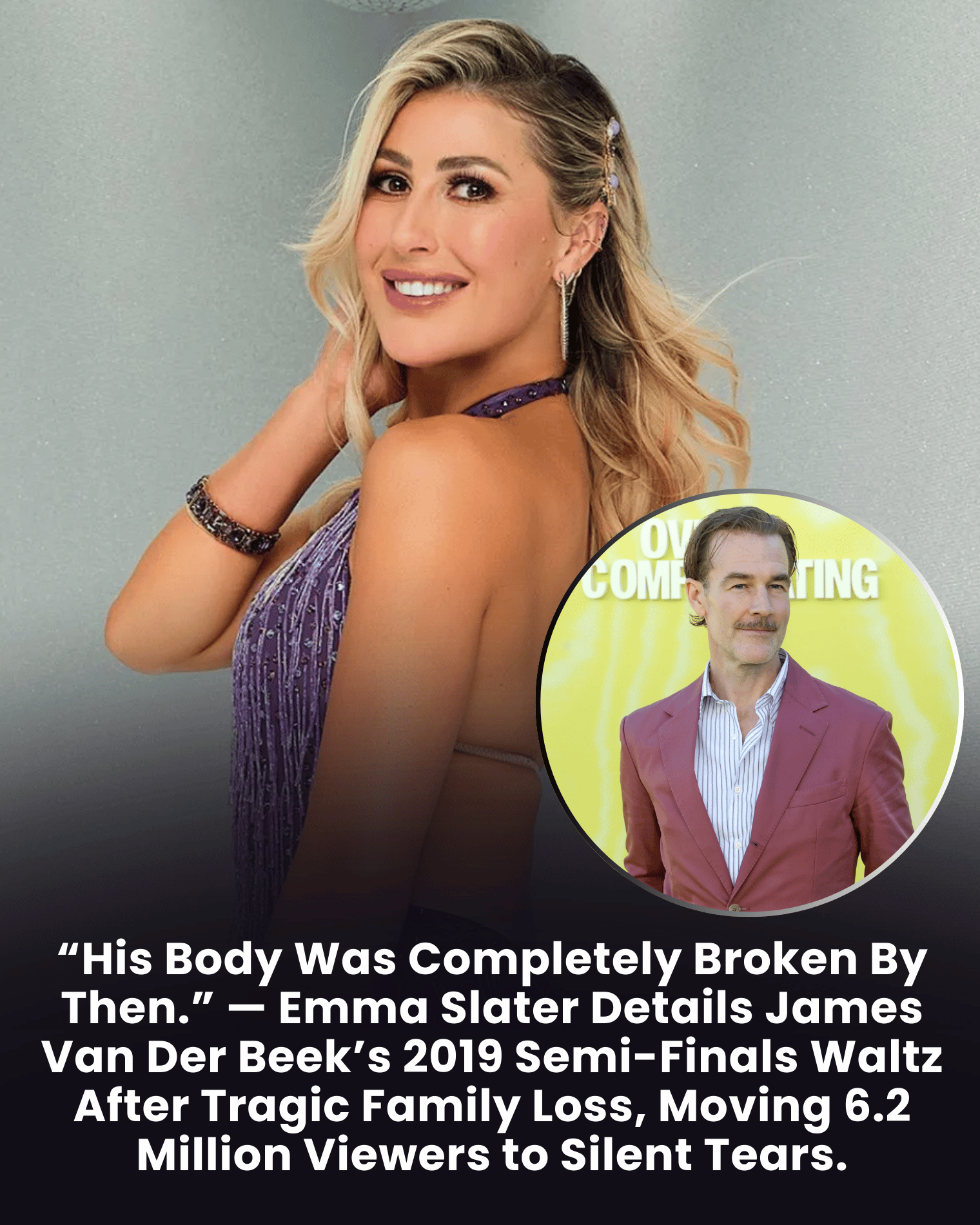
In November 2019, millions of viewers witnessed a television moment that transcended competition, choreography, and even entertainment itself. It was not just a dance. It was grief made visible. At the center of it stood James Van Der Beek, a man carrying a heartbreak so recent and so profound that it seemed almost impossible he could even step onto the stage.
Just days before the semi-finals of Dancing with the Stars, his wife had suffered a devastating miscarriage. The loss was not private for long; it became known to the public, casting a heavy, somber weight over what was supposed to be a celebratory milestone in the competition. For most people, such grief would demand stillness, retreat, and time away from the spotlight. Yet Van Der Beek chose to show up.
His partner, Emma Slater, later described the experience with a kind of quiet awe. She wasn't just guiding a celebrity through choreography. She was standing beside someone whose body and spirit were under immense emotional strain. According to her, he was "completely broken" in those moments leading up to the performance. But what stood out was not fragility alone—it was determination.
When they began their Foxtrot to Hozier's "Take Me to Church," the atmosphere in the ballroom shifted almost instantly. This was no longer about technique or scores. Every movement carried weight. Every step felt like it was pulled from somewhere deep and painful. Slater could feel him trembling, not from nerves, but from the sheer force of what he was holding inside.
There was no attempt to hide the sorrow. No performance mask. Instead, Van Der Beek allowed the grief to exist fully within the dance. His posture, his expressions, even the way he held his partner—all of it told a story that words could not capture. It was raw, unfiltered, and deeply human.
For the 6.2 million viewers watching, the effect was immediate and overwhelming. The room fell into a kind of stunned silence as the performance ended. Applause came, but it felt secondary to the emotional release that had just taken place. This wasn't about entertainment anymore. It was about witnessing someone process loss in real time.
When the music stopped, the emotional dam broke. Van Der Beek collapsed into Slater's arms, weeping openly. There was no attempt to compose himself for the cameras. In that moment, vulnerability became the most powerful statement he could make. It resonated far beyond the ballroom, reaching into living rooms where viewers saw not a polished performance, but a reflection of something deeply familiar: the struggle to keep going when everything inside you wants to stop.
What made the moment so unforgettable was its honesty. Television often thrives on illusion, on carefully crafted narratives and controlled emotions. But this was different. This was a man honoring his family, his loss, and his pain in the only way he could at that moment—by moving through it.
Years later, that performance is still remembered not for its technical brilliance, but for its emotional truth. It stands as a reminder that sometimes the most powerful thing a person can do is simply show up, even when they feel completely broken, and allow the world to see them as they are.